New 2022 15% 0,75 lt

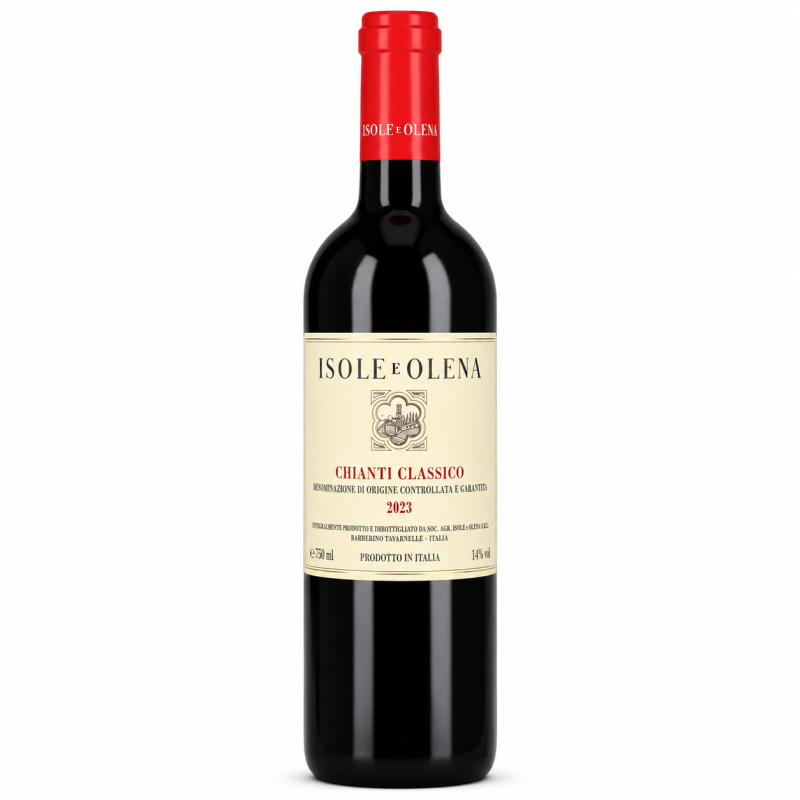
Isole e Olena Chianti Classico 2023 captures the character of its appellation without confusing power with quality. Sangiovese provides the vivid fruit, fresh line and underlying tannic tension; Canaiolo plays a complementary role in the blend. Together they make a wine that feels entirely at home with food yet rewards closer attention in the glass. The 2023 vintage also illustrates how a long-established estate can preserve its identity while moving into a new chapter, offering an accessible route into one of the most respected names in Chianti Classico.
The name Isole e Olena comes from two neighbouring estates brought together by the De Marchi family in the 1950s. Its first Chianti Classico was produced in 1969. From the mid-1970s, Paolo De Marchi became a central figure in the estate’s development and helped raise the reputation of Sangiovese from this part of Tuscany. In 2022 the property changed ownership, joining the group headed by Christopher Descours, whose wine interests also include Biondi-Santi and renowned Champagne houses. Throughout these changes, Chianti Classico has remained an essential statement of the estate’s philosophy: recognisable, balanced, rooted in local grapes and made for more than occasional ceremonial drinking.
The vineyards lie near San Donato in Poggio, on the western side of Chianti Classico. The production area includes sites at approximately 300–480 metres above sea level, with predominantly southern and south-western exposures. Limestone, clay slate, marl and sandstone contribute to a varied geological setting, and the area’s exposure to cooling air is an important part of its identity. These are not decorative background details: altitude, soil structure and ventilation all influence the pace of ripening and the freshness that makes the wine so well defined. The finished bottle is an expression of estate fruit rather than a generic model of Tuscan red wine.
Following a run of notably hot years, 2023 brought a more even growing season. Rainfall during spring helped replenish the soils, and summer was warm without the severe heat spikes experienced in some recent vintages. Periodic rain during the growing cycle aided vine health and allowed the fruit to develop more gradually. The result can be seen in the way ripeness and energy coexist: the wine has expressive fruit and a convincing structure, but its acidity and savoury definition remain very much part of the picture. Rather than presenting the vintage as universally superior, the more useful point is how its conditions shaped a balanced style of Chianti Classico.
For this vintage, the blend is 90% Sangiovese and 10% Canaiolo. Fermentation takes place in stainless steel tanks, protecting varietal identity and the freshness of the wine. It is then matured for 12 months in large oak casks and spends another six months in bottle before release. The oak supplies a measured setting for tannin integration without dominating the fruit with heavy toast. This is a wine whose structure comes from its grape varieties and vineyard sites, not from an exaggerated winemaking signature. The listed alcohol content is 14.5% ABV, and the bottle format is 750 ml.
The 2023 combines red and dried cherry aromas with sweet violets and aromatic herbs. Other vintage-specific assessments highlight blackberry, graphite, subtle smoky notes and a citrus accent towards the finish. On the palate, the wine is medium-bodied and energetic, with polished tannins, bright acidity and a finish that carries fruit and savoury detail together. Its appeal is not simply that it feels smooth: there is enough texture and definition to make each glass interesting, especially as the wine opens with air. Enjoy it for its youthful clarity or allow it to develop further under suitable cellar conditions, without assuming a fixed drinking window for every stored bottle.
This Chianti Classico is naturally suited to pasta with meat ragù, roast lamb or beef, grilled Tuscan steak, aged cured meats and Pecorino. Its freshness balances richer dishes, while its herbal and earthy notes also make it an interesting match for mushrooms or black-truffle pasta. Serving at about 16–18°C will help maintain aromatic detail and prevent alcohol from feeling too pronounced. A moderately generous red-wine glass is a good choice, leaving room for the wine’s floral and spicy notes to evolve as the meal progresses.
The 2023 vintage received 94 points from James Suckling, 93 from Wine Advocate and 91 from Decanter; Falstaff also awarded 93 points in a 2026 tasting. These scores refer to this vintage and are not borrowed from older releases. Etilika includes the bottle among “Our Picks” because it combines a well-documented winemaking tradition with a clearly expressed sense of place. It is an especially worthwhile choice for anyone discovering Isole e Olena, comparing different Sangiovese-led wines, or looking for a serious Tuscan red that remains genuinely useful at the dinner table.